Georgia Tann: The Woman Who Commercialized Adoption
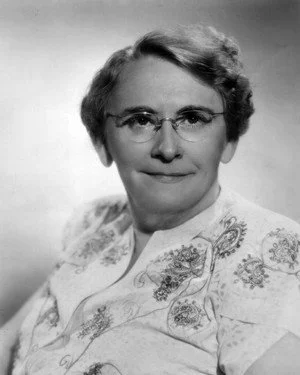
The Question
Did Georgia Tann steal more than 5,000 children and make millions of dollars selling them through the Tennessee Children's Home Society? And was she responsible for creating modern American adoption?
The historical record establishes that Tann operated an extensive illegal adoption enterprise. However, the precise number of children unlawfully separated from their families, the total amount of money she accumulated, and her influence on modern adoption require closer examination.
Why This Matters
Georgia Tann's history raises questions extending far beyond one individual.
How could an organization entrusted with protecting vulnerable children operate for decades while engaging in unlawful adoption practices? What allowed government officials and courts to overlook warning signs? And how did these events influence adoption practices in the United States?
Examining this history helps distinguish the development of adoption as a legal institution from the practices of individuals who exploited it.
It also provides an opportunity to consider the experiences of adopted people and families whose lives were affected by the Tennessee Children's Home Society.
What the Evidence Establishes
1. Georgia Tann did not invent modern adoption.
Georgia Tann began her career in child welfare before establishing herself in Memphis during the 1920s.
Adoption laws, private placement agencies and organized child welfare services already existed before her involvement.
Her influence came primarily through the promotion and commercialization of adoption.
Tann advertised children in newspapers, cultivated relationships with affluent prospective adoptive parents and promoted adoption as a desirable way to build a family.
Her methods helped increase adoption's visibility, but describing her as its founder overlooks the institution's earlier history.
2. Thousands of children passed through her operation.
From approximately 1924 until 1950, Tann directed the Memphis branch of the Tennessee Children's Home Society.
Historical accounts commonly estimate that her operation arranged placements involving approximately 5,000 children.
Evidence documents that children were unlawfully separated from their families through coercion, deception, falsified documentation and improper legal proceedings.
However, the estimated number of placements should not automatically be treated as the verified number of abductions.
Incomplete and destroyed records make determining the precise number of children unlawfully taken from their families particularly difficult.
3. Tann's operation generated substantial financial proceeds.
Tann collected significant payments from prospective adoptive parents, frequently presenting those charges as legitimate administrative and transportation expenses.
Historical investigations uncovered financial irregularities, including undisclosed accounts and improper handling of adoption-related payments.
Subsequent historical reporting estimates that her operation generated approximately $1 million during her career.
That figure represents historical dollars, not an independently verified accounting of her personal profit.
Some historical accounts suggest that individual placements generated thousands of dollars.
However, describing Tann as having personally earned millions without specifying the evidence or adjusting for inflation would be misleading.
4. The operation benefited from institutional failures.
Tann maintained influential relationships within Memphis political and judicial circles.
Juvenile Court Judge Camille Kelley played a significant role in approving adoptions associated with the Tennessee Children's Home Society.
Historical investigations subsequently identified improper adoption proceedings and failures in institutional oversight.
The Child Welfare League of America withdrew its endorsement of the Memphis operation in 1941 after identifying serious concerns about its practices and recordkeeping.
Despite mounting criticism, the operation continued for several more years.
These events demonstrate that the scandal involved failures extending beyond Tann's individual conduct.
5. The 1950 investigation exposed extensive misconduct.
Tennessee Governor Gordon Browning initiated an investigation into the Tennessee Children's Home Society in September 1950.
Tann died on September 15, 1950, before the investigation was completed.
The subsequent investigation uncovered extensive irregularities involving child placements, finances, recordkeeping and the treatment of children.
The Tennessee Department of Public Welfare presented its findings to Governor Browning in a report dated June 12, 1951.
Tann was never criminally prosecuted, and the investigation did not result in criminal convictions of the principal individuals involved.
6. The consequences extended beyond the closure of the organization.
The scandal prompted increased scrutiny of adoption practices and contributed to subsequent legislative developments.
However, some legal changes also created significant difficulties for affected families seeking information.
Tennessee's 1951 legislation sealed adoption records, complicating efforts by many adopted people to investigate their origins.
Decades later, Tennessee enacted legislation providing eligible individuals with access to adoption records, including records associated with the Tennessee Children's Home Society.
For many families, obtaining information about their histories remained a lengthy and difficult process.
Important Context and Limitations
Three distinctions are essential when interpreting the historical record.
First: The commonly cited estimate of 5,000 children does not establish that exactly 5,000 children were abducted. The available evidence supports extensive unlawful placements, but precise totals remain uncertain.
Second: Financial estimates must distinguish organizational revenue, improper payments and Tann's personal financial gain. Historical-dollar figures should not be confused with inflation-adjusted equivalents.
Third: Tann's influence on adoption does not establish that she created the institution or that every contemporary adoption practice originated with her.
Historical influence and direct causation are different claims.
Examine the Evidence
Primary Historical Sources
1. Georgia Tann and Tennessee Children's Home Society Investigation Scrapbooks (1950)
Tennessee State Library and Archives
This archival collection contains contemporary newspaper coverage documenting the investigation into Georgia Tann and the Tennessee Children's Home Society. The linked document is a collection guide, rather than the complete contents of the scrapbooks.
2. Tennessee Children's Home Society Collection
Memphis Public Library and Information Center
This collection includes historical newspaper coverage, organizational reports, information concerning Juvenile Court Judge Camille Kelley, and materials relating to the investigation. The collection guide identifies the documents available to researchers.
3. Report to Governor Gordon Browning on Shelby County Branch, Tennessee Children's Home Society (1951)
Tennessee Department of Public Welfare
The original government investigation report concerning the Shelby County branch of the Tennessee Children's Home Society.
The link leads to a library catalog record identifying the original report, not a digitized copy. Readers interested in examining the complete report may need to obtain it through a participating library.
4. Tennessee Adoption Records Legislation
State of Tennessee, statutory compilation
Tennessee's statutory provisions address access to historical adoption records, including records maintained by the Tennessee Children's Home Society.
This legislation is relevant to understanding subsequent efforts to make historical adoption records accessible to eligible individuals.
Tennessee Comptroller of the Treasury
Secondary Historical Sources
Jordan Friedman, Smithsonian Magazine, September 23, 2026
This historical investigation examines Georgia Tann's operation, drawing on historical research and survivor accounts.
It discusses the scale of the operation, financial estimates, institutional failures, and the lasting consequences experienced by affected families.
2. Tennessee Historical Society: Georgia Tann Historical Presentation
Tennessee Historical Society, 2022
This historical presentation explores the Tennessee Children's Home Society scandal through historical research and firsthand survivor experiences.
It provides additional context concerning Tann's activities and the experiences of families affected by the organization.
3. Additional Recommended Reading
This book investigates Tann's operation, its financial activities, and the institutional circumstances surrounding the scandal.
Before and After: The Incredible Real-Life Stories of Orphans Who Survived the Tennessee Children's Home Society, by Judy Christie and Lisa Wingate.
This book documents the experiences of individuals affected by the Tennessee Children's Home Society and their subsequent efforts to understand their family histories. Both books are discussed in the historical materials referenced above.
What Remains Unanswered?
Although the scandal has been extensively investigated, important questions remain.
How many children were unlawfully separated from their families? How many placements involved coercion rather than outright abduction? What proportion of the financial proceeds went directly to Tann? And how extensively did government officials understand the operation's misconduct before intervening?
Additional examination of contemporary records may clarify particular cases, but incomplete documentation places limits on what researchers can establish.
Conclusion
Georgia Tann's operation illustrates the consequences of allowing institutional authority, financial incentives and inadequate oversight to converge in child welfare.
Her influence on the public image of adoption is historically significant. So are the experiences of the children and families affected by her practices.
Understanding that history requires examining documented misconduct without confusing historical estimates with verified totals.
The evidence is substantial. Its limitations deserve equal attention.
Research status: Documented, with qualifications concerning historical estimates
Last reviewed: September 26, 2026
Corrections or updates: None at this time.